This landlord compliance guide details your legal responsibilities under New Zealand tenancy law. To comply with the Residential Tenancies Act 1986, landlords must meet strict Healthy Homes standards for heating, insulation, and ventilation. You must also lodge bonds properly, maintain records, and follow statutory processes for rent arrears and pet requests.
Meeting these standards protects your investment and ensures tenants live in warm, dry homes. Non-compliance can result in substantial financial penalties from the Tenancy Tribunal. Staying informed helps you manage your rental property with confidence and clarity.
What are the five Healthy Homes standards? #
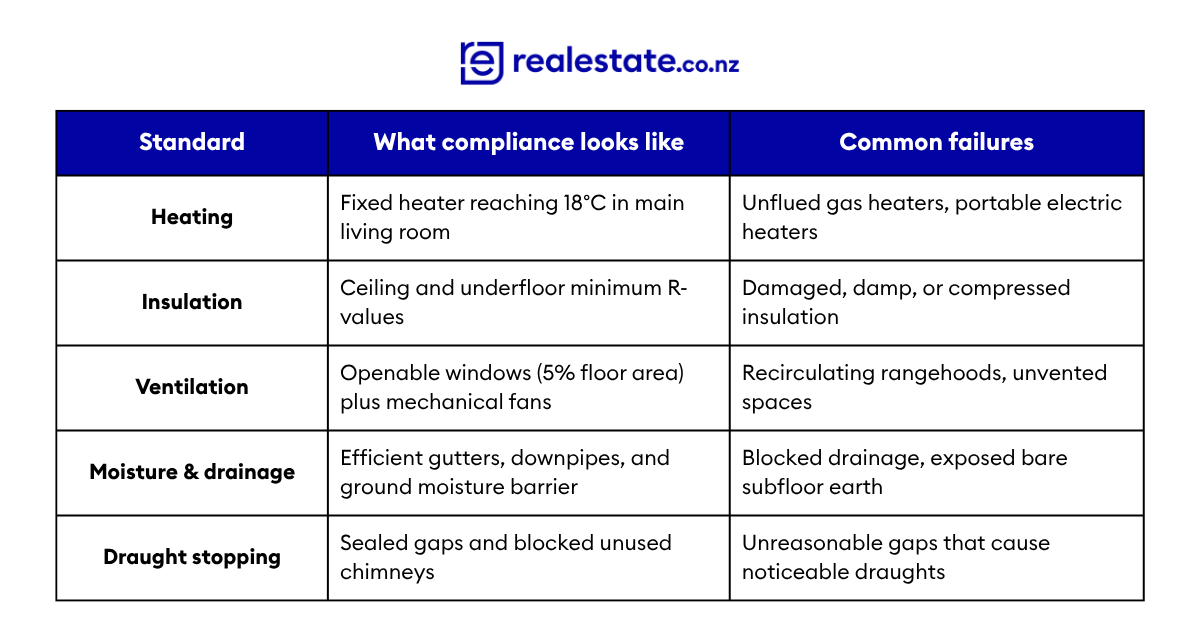
The Healthy Homes standards establish specific physical requirements for all private residential rental properties in New Zealand. Landlords must maintain compliance across five distinct areas throughout every tenancy.
1. Heating standard
The main living room must have one or more fixed heaters capable of warming the space to at least 18°C on the coldest winter days. Qualifying heaters include qualifying heat pumps, wood burners, or flued gas heaters. Unflued gas heaters, open fires, and portable electric heaters do not meet this standard.
2. Insulation standard
Ceiling and underfloor insulation must meet minimum R-value standards for your climate zone. Existing ceiling insulation must be at least 120 mm thick and in reasonable condition without dampness or settling. Underfloor insulation must have a minimum R-value of 1.3 across all accessible subfloor areas.
3. Ventilation standard
Every habitable room must feature openable windows or exterior doors that equal at least 5% of the floor area. In addition, kitchens require an extractor fan vented outdoors with a minimum diameter of 150 mm or an exhaust capacity of at least 50 litres per second. Bathrooms need an outdoor-vented extractor fan with a minimum diameter of 120 mm or an exhaust capacity of at least 25 litres per second.
4. Moisture ingress and drainage standard
Rental properties must feature efficient drainage systems that divert stormwater, surface water, and groundwater away from the dwelling. If your home has an enclosed subfloor space, you must install a ground moisture barrier where it is reasonably practicable. This polyethene barrier stops rising damp from permeating subfloor timbers and entering the living areas.
5. Draught stopping standard
Landlords must block all unreasonable gaps or holes in walls, ceilings, windows, skylights, floors, and doors. Unused open fireplaces must be closed off or their chimneys blocked to prevent cold draughts. These measures help reduce energy loss and maintain stable indoor temperatures.
Core landlord responsibilities under the Residential Tenancies Act #
The Residential Tenancies Act 1986 outlines the broader legal framework governing tenancy agreements in New Zealand. Under this legislation, landlords are responsible for ongoing property maintenance and repair. You must provide the premises in a reasonable state of cleanliness and ensure all locks are secure.
Landlords must also respect tenant privacy. You cannot enter the premises without giving the legally required notice. Routine inspections require a minimum of 48 hours notice, while repairs require 24 hours notice.
You must supply a signed Healthy Homes compliance statement with every new or renewed tenancy agreement. Keeping comprehensive compliance records is mandatory.
Managing bond deductions fairly #
All tenancy bonds must be lodged with Tenancy Services within 23 working days of receipt. Landlords cannot charge more than four weeks' rent as a bond. At the end of a tenancy, both parties should agree on the bond refund, or the Tenancy Tribunal can decide.
Bond deductions can only cover specific lawful costs. You may claim unpaid rent, outstanding water charges, or repair costs for intentional or careless damage. You cannot deduct money for fair wear and tear.
- Allowable deductions: Unpaid rent, intentional or careless tenant damage, unapproved property alterations, and unreturned keys.
- Prohibited deductions: Natural paint fading, minor scuffs from ordinary use, worn carpet pile, and routine maintenance costs.
Pet requests and lawful grounds for refusal #
Recent tenancy reforms have clarified the rules regarding pets in residential rental homes. A tenant must seek written consent from the landlord before bringing a pet onto the property. Landlords cannot withhold consent unreasonably.
Acceptable grounds for refusing a pet include strict body corporate rules prohibiting animals or unsuitable property fencing. Incompatible property dimensions or council bylaws restricting animal numbers also represent valid reasons. Landlords can charge a pet bond of up to two weeks' rent to cover potential pet-related damage.
Eviction processes for unpaid rent #
A structured legal process governs rent arrears in New Zealand. When a tenant falls behind on rent, you can issue a formal 14-day notice to remedy. This written notice informs the tenant of the overdue amount and gives them 14 days to clear the balance.
If the rent remains unpaid after 14 days, you can apply to the Tenancy Tribunal for mediation or a hearing. If a tenant falls at least 21 days behind in rent, landlords can apply directly to the Tribunal for termination of the tenancy.
Alternatively, you may issue separate formal notices on three separate occasions within a 90-day window. Each notice must document rent remaining unpaid for at least five working days. Following the third notice, you may apply to the Tenancy Tribunal for tenancy termination. Landlords must never attempt self-help evictions, such as changing locks or cutting off utilities.
Frequently asked questions (FAQ)#
What happens if my rental does not meet Healthy Homes standards?
The Tenancy Tribunal can order landlords to pay exemplary damages of up to $7,200 to the tenant. Continued non-compliance can also result in formal improvement notices from the Tenancy Services Compliance and Investigations team.
Can I inspect my rental property whenever I want?
No, landlords must provide between 48 hours and 14 days written notice before carrying out a routine inspection. You may only conduct routine inspections once every four weeks.
Who pays for professional heat pump servicing?
Landlords are responsible for servicing and maintaining fixtures provided with the rental, including heat pumps. Tenants are only responsible for regular day-to-day cleaning, such as clearing lint and dust from air filters.
Where can I check current rental market data?
You can explore comprehensive rental statistics and median asking prices on realestate.co.nz's rental market insights. Reviewing these figures helps landlords understand regional rental activity and demand patterns.
This article is general information only and isn't legal or financial advice. Check the latest requirements before making financial decisions.
Searching for an investment property?#
Explore the latest listings across New Zealand on realestate.co.nz.