It all starts here: Why home is the best school
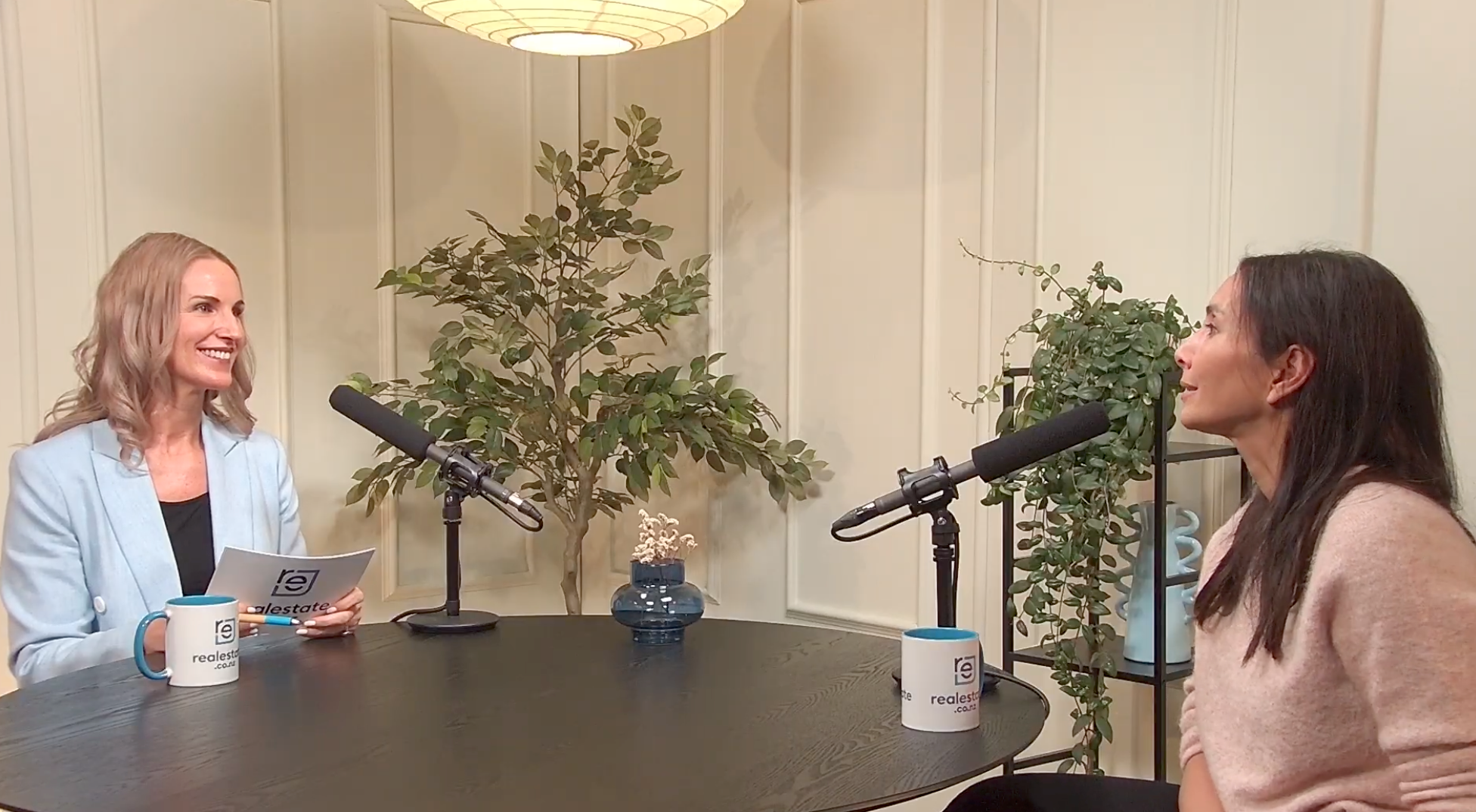
Michelle Dickinson's school grades were bad enough that, by her own account, she shouldn't have made it to university. She got there anyway. In this conversation, host Vanessa Williams talks with Dr Michelle Dickinson, known to many as Nanogirl, about why home was the best school she ever had. It traces back to her early years as a military kid who never really felt she had a home of her own, right through to buying and renovating her very first home, brick by brick, at 18, while working three jobs at once. She also shares how she's helping her preschool twins, raised in Cantonese, English and te reo Māori, learn at home for a world AI is already reshaping.
In the latest episode of It all starts here, Michelle sits down with Vanessa Williams, GM - Customer at realestate.co.nz, to share the story behind her first home: a tiny, run-down two-bedroom terrace in the UK that she bought with savings from years of working from the age of 14.
Highlights #
- At eight, her dad handed her a soldering iron and she burned her fingers finding out how it worked. It's the moment she still traces her whole career back to.
- Military housing meant no posters, no say in the paint colour, and a move every two to three years with just a few belongings. Her favourite posting was a Hong Kong apartment ringed by wild monkeys.
- She was teaching piano at 14, washing bar glasses at 16, then waitressing and folding T-shirts in a sports store, often three or four jobs at once, all to save for a home.
- At 18, she bought a derelict London terrace for £50,000 and rebuilt it herself. Halfway through knocking out a wall, she discovered she was allergic to the horsehair in its Victorian-era mortar.
- She paid her way through it all, working three or four jobs at once. One of them she invented herself: rewriting her university lecture notes so neatly on the train home that classmates started paying her for copies.
- She restored, rather than replaced, the 100-year-old villa she lives in now, rebuilt around a 6'9" husband, twin toddlers, and a garden they harvest from every morning.
- She's raising her own twins on that same curiosity, rather than instant answers, now that she's working at the frontier of an AI-shaped world herself.
Michelle Dickinson shares how buying her first home at 18 shaped her view of home, family and learning.
A childhood without a home#
Michelle grew up as a military child, moving between countries and military housing every few years. The homes were temporary and couldn't be personalised. Even putting posters on her bedroom walls wasn't allowed.
Rather than seeing this as a disadvantage, Michelle believes the experience gave her resilience, adaptability and an ability to connect with people quickly.
One of her favourite childhood homes was an apartment in Hong Kong's New Territories, surrounded by lush greenery and wild monkeys. The communal nature of apartment living stood out to her: children gathered in shared spaces, neighbours knew one another and parents could watch from their homes.
For Michelle, it demonstrated that a home doesn't need to be large to be meaningful.
“It's about who is there and what you do in that space that's important.”
Buying a home at 18#
Michelle started working at 14, determined to save enough money to buy a home. She taught piano and keyboard, worked in bars and restaurants and took on jobs in retail, putting as much as she could aside.
Eventually, she saved £5,000 for a 10% deposit on a £50,000 property.
The house needed extensive updating, so Michelle taught herself how to tile, remove a kitchen and renovate the interior. She even knocked through a wall, carefully removing the bricks one by one so she could sell them.
There was an unexpected downside: the 1890s mortar contained horsehair, triggering a severe allergic reaction.
But the project taught Michelle something that would become central to her career: she loved understanding how things worked and solving problems with her hands.
Learning starts at home#
Michelle's passion for engineering began around the dining table with her dad, who was studying electrical engineering as an adult.
At just eight years old, she became fascinated by what he was doing and asked for a soldering iron.
After the inevitable burnt fingers, Michelle began learning about circuits and electronics. While school didn't necessarily reward the way she learned, home gave her the freedom to explore.
That experience continues to influence how she raises her own children.
Michelle believes home can be a place where children learn without the pressure of grades or performance — a place where they can follow their curiosity and discover what they're naturally good at.
Creating a home for her family#
Today, Michelle's favourite home is her current home, a 100-year-old villa in Auckland that she transformed into a family home.
When her husband first saw the property, his reaction was essentially that nobody could live there. Michelle, however, could see its potential.
Rather than demolishing it, they restored the villa while modernising it for their family. Original features such as timber, doors and skirting were retained, while rooms were reconfigured around natural light and practical family living.
With twins on the way, Michelle also designed the house around the realities of family life — including wider doors for a double buggy and a kitchen tall enough for her 6'9" husband to cook comfortably.
Outside, a sloping garden was terraced and transformed into an edible garden where her children can pick and eat food they've grown.
The result is a home that reflects not just Michelle's style, but the way her family lives.
If money were no object...#
Michelle's dream home isn't a mansion.
If she won the lottery, she'd choose a small cottage on a large piece of land in Aotearoa New Zealand — ideally by the coast — and use the land to create a public science garden.
A place where children and families could explore science through nature, plants, wind, food and curiosity.
It's a fitting vision for someone whose own journey began with a soldering iron at the dining table and a childhood curiosity about how the world works.
For Michelle, the ultimate luxury isn't having more things. It's creating opportunities for people to learn, connect and discover what they're capable of.
And perhaps that's the biggest lesson from her story: home isn't simply where you live. It's where you feel safe enough to be curious, to experiment and to become who you're meant to be.
If Michelle’s story struck a chord, follow It all starts here wherever you get your podcasts.