The Reserve Bank of New Zealand has held the Official Cash Rate (OCR) at 2.75% in its sixth policy review of 2026.
Sarah Wood, CEO of realestate.co.nz, says the OCR hold provides welcome stability, but warns that further rate rises could be ahead.
"Holding at 2.75% is the right call for now. With an election around the corner and so much uncertainty in the economy, stability matters.
On realestate.co.nz we’re seeing more new listings and steady asking prices. A hold gives that momentum room to build.
But a hold isn’t relief. A lot of New Zealanders are still feeling the pinch, and a cut would have eased some of that. I expect the Reserve Bank will keep the door open to further rises. If you’re planning to buy or refinance in the next few months, keep a close eye on what comes next."
What is the OCR and why does it matter?#
The OCR is the headline interest-rate tool the Reserve Bank uses to achieve and maintain price stability. It's the rate banks can borrow or deposit funds overnight, and it influences the full spectrum of interest rates: mortgage rates, business lending rates, and savings rates.
The Monetary Policy Committee (MPC) reviews the OCR 8 times a year.
When it moves:
- If the OCR goes down, interest rates typically follow, making mortgage repayments lower and supporting home-buying demand.
- If the OCR goes up, borrowing costs increase, which tends to slow spending and inflation, and reduce home-buyer capacity.
Because property is such a big part of how New Zealanders borrow and invest, changes to the OCR often flow through to the housing market, making any shifts big news for buyers and homeowners.
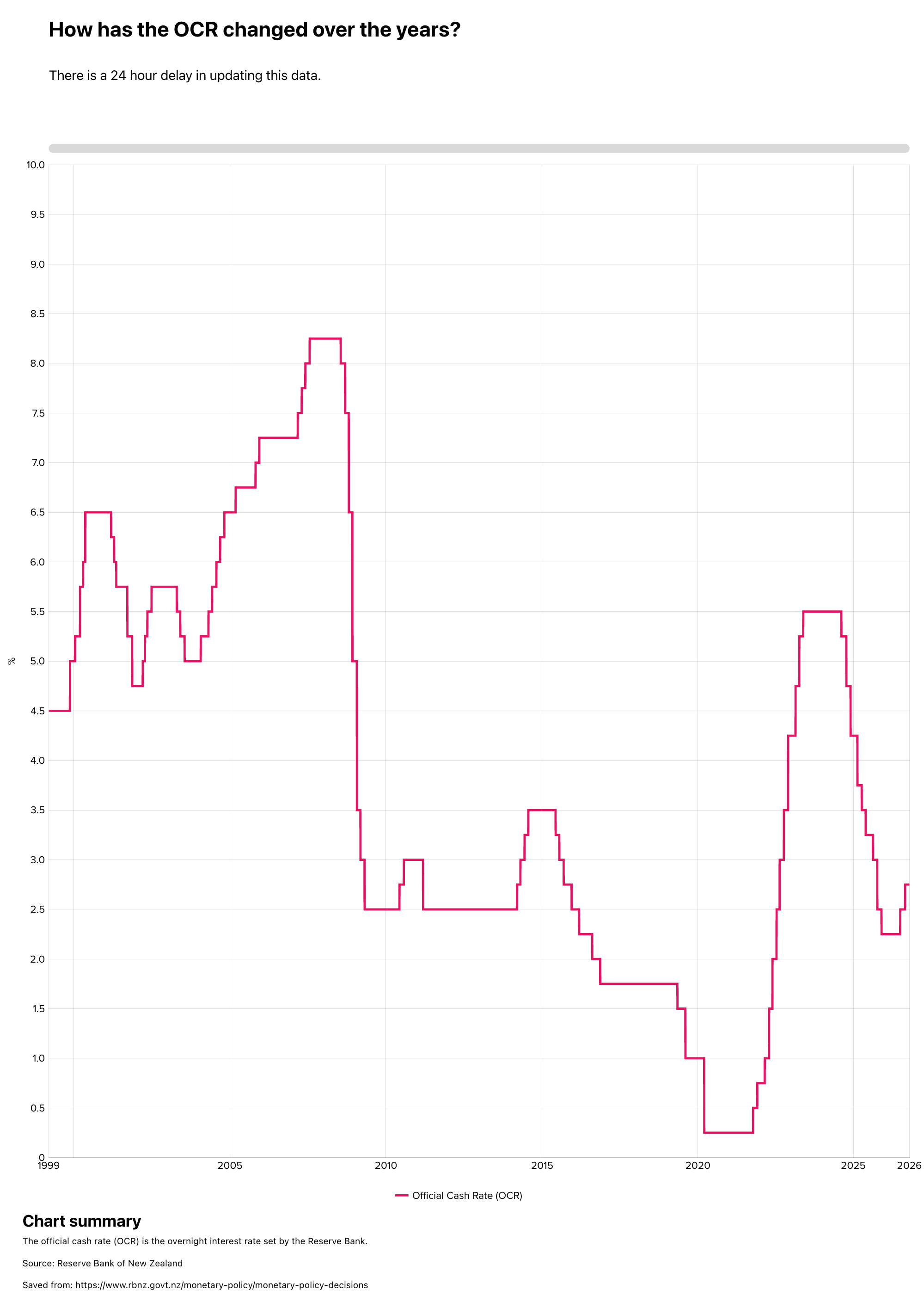
In response to the pandemic (2020-2021) the OCR was slashed to a record low of 0.25%, meaning ultra-low mortgage repayment rates.
As inflation took off in 2022, the Reserve Bank raised the OCR rapidly, reaching around 5.5%, the highest level in recent years.
As inflation eased through 2024 and into 2025, the Reserve Bank shifted direction and began cutting the OCR again.
The takeaway? #
The ultra-low rates during Covid were outliers in response to an unprecedented global event. If we look at the long term, OCR levels closer to 3%-4% have been more typical. So, for buyers and homeowners today, it's helpful to recognise we're moving back to more “normalised” territory.
As always, while lower rates are helpful, they don't replace solid planning: checking your deposit, understanding your budget, and working with experts such as a mortgage broker or lender.
Frequently asked questions (FAQ)#
How does the OCR affect my savings accounts and term deposits?
Changes to the OCR can affect the amount of interest you earn on your savings accounts and term deposits. When OCR levels go up, interest rates on savings accounts increase. When OCR levels go down, savings earn less interest, so some people choose to invest in other ways.
How does the OCR affect my mortgage?
When the OCR goes up, mortgage rates often increase, meaning more of your income goes towards your mortgage repayments. Some people may choose to delay buying a home, which can reduce pressure on house prices.
When the OCR goes down, mortgage rates usually fall, leaving households with more room in their budgets. As borrowing is cheaper, more people may choose to buy, which can push house prices up.
However, mortgage rates don't always move in line with the OCR. Floating rates tend to respond more directly, while fixed rates also depend on banks' funding costs and expectations of future interest rates.
Ready to start your search?#
Explore the latest listings across New Zealand on realestate.co.nz.