Kitchen planning mistakes that affect function, budget and resale
A beautiful kitchen can help transform the way a home feels, but the best kitchens are not designed by appearance alone. Behind every successful kitchen renovation is a series of practical decisions about layout, workflow, trades, materials, storage, lighting, plumbing, electrical work and how the household actually uses the space.
That is where many homeowners can get caught out. They start with the look they want, or an appliance they love, without first understanding how the whole project needs to come together.
Mark Bruce, Operations Manager at Kitchen Studio, says functionality should come before the final look of the kitchen. The aesthetic should reflect the homeowner’s taste, but the layout needs to support the way people cook, clean, gather and move through the space.
Look at what isn’t working#
A good starting point is to be honest about what does not work in your current kitchen. Is the fridge too far from the pantry? Does everyone crowd into the same corner? Is the sink, hob or rubbish bin in the wrong place? Are small appliances permanently cluttering the bench? These daily frustrations are often the clues that help a designer create a better result.
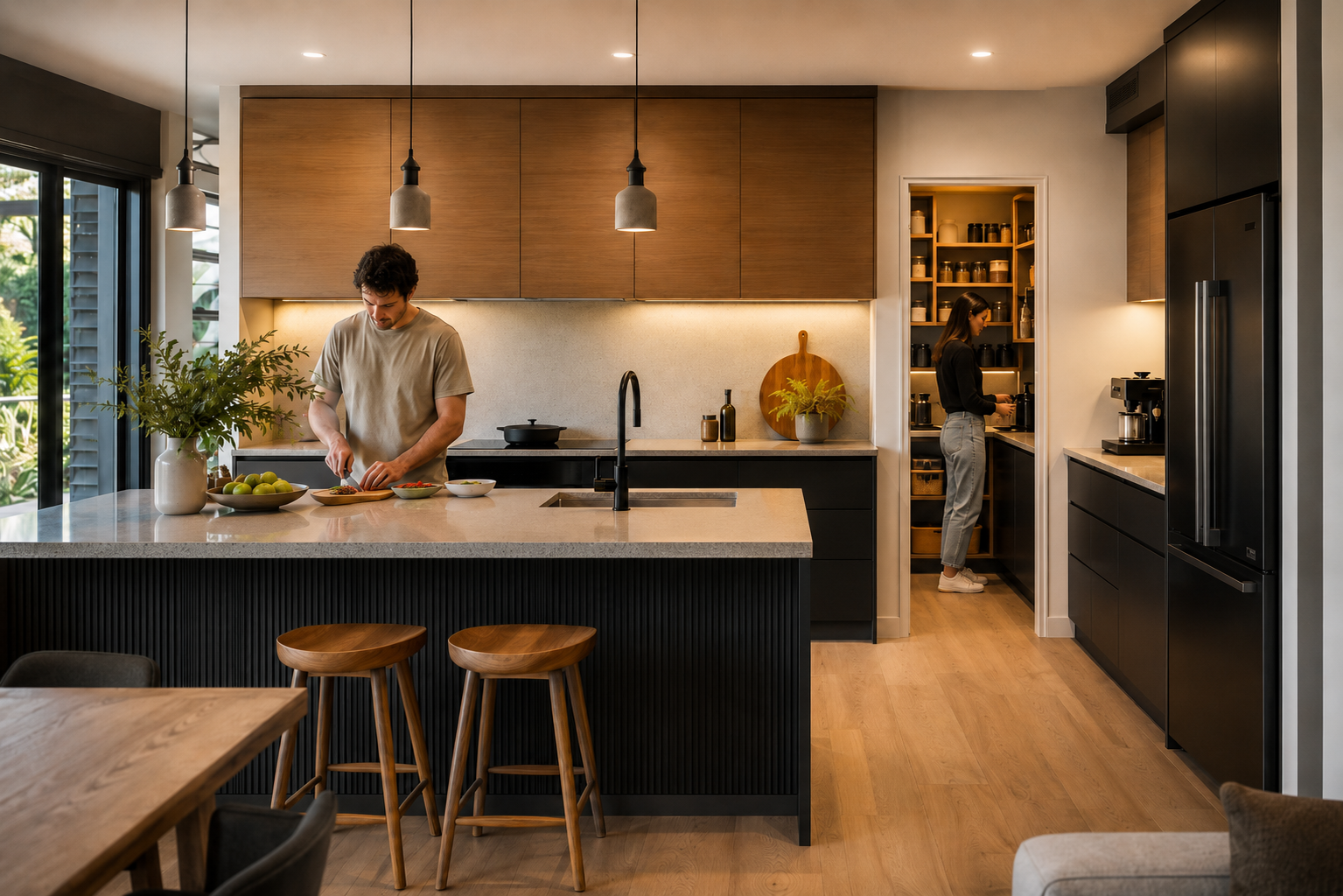
One mistake is assuming the old “working triangle” between fridge, sink and oven is all that matters. While the principle is still useful, modern kitchens often need to work in zones. Families may need preparation zones, cleaning zones, storage zones, homework zones, coffee stations, appliance garages, or a scullery that keeps mess and noise away from the main living space.
Sculleries and butlers’ pantries remain popular, but they need to be planned carefully. If the scullery becomes the real working kitchen, the main kitchen can lose some of its purpose. If it is too far from the fridge or main preparation area, it can also create unnecessary walking and duplication. The question is not simply whether a scullery is on trend, but whether it genuinely improves the way the household lives.
Dave Wilson from Mastercraft Kitchens says homeowners also need to understand that a kitchen renovation is much more than cabinetry. It can involve electrical, plumbing, flooring, lighting, wall changes, ventilation, bench-tops, appliances and installation. In that sense, a kitchen can feel like a whole house build concentrated into one room.
Plan for trades, timing and potential delays#
That complexity can affect both budget and timing. Trades often need to return more than once. Electrical work may need a pre-wire before cabinetry is installed, then a fit-off afterwards. Plumbing may also need to happen in stages. If those steps are not coordinated, one delay can push out the next part of the project.
This is why early planning matters. A kitchen designer can help homeowners think through the order of decisions, the right questions to ask, and which trades need to be involved before work begins. In older homes, it may also be the right time to check whether plumbing, wiring, ventilation or water pressure needs upgrading while the space is already being opened up.
Set a realistic kitchen renovation budget#
Budget is another area where homeowners can make mistakes. A clear budget does not limit the design process. It helps focus it. Different bench-tops, cabinetry, hardware, appliances and finishes can shift the overall cost significantly. A designer who understands the budget can guide homeowners toward products and design choices that suit both the lifestyle and the budget.
Appliances are another common trap. Buying appliances too early can force the kitchen to work around products that may not suit the final layout. It is usually better to design the kitchen first, then choose appliances that support the way the space will function.
For resale, the strongest kitchens are usually the ones that feel practical, durable and well considered. Buyers notice the obvious things, such as bench-tops, colours and cabinetry. But they also notice how drawers close, whether lighting is useful, whether storage makes sense, and whether the room feels easy to live in.
A successful kitchen does not have to chase every trend. It needs to work beautifully for everyday life, sit comfortably within the home, and avoid expensive compromises that could have been solved at the planning stage.
To learn more about kitchen design inspiration, planning, top tips and more, visit the Trends Property Kitchen section, where you can read, look, watch and listen, including the Trends Property Insight Series featuring interviews with Dave Wilson and Mark Bruce.