Why landscaping should not be the forgotten part of property planning
Kitchens, bathrooms and interiors often receive the most attention when homeowners renovate, build or prepare to sell, but the exterior of a property can play just as important a role in lifestyle, street appeal, long-term value and buyer confidence.
When people think about improving a home, the focus often moves quickly inside. Kitchens are redesigned, bathrooms are refreshed, walls are painted, flooring is updated, and furniture is chosen to create a more polished sense of living. These are important decisions, but they are not the only ones that shape how a property is experienced.
Why the exterior of your home matters#
The exterior of a home can be just as influential. It is the first thing people see, the setting for everyday outdoor living, and the part of the property that often determines how the home connects to its site, street, garden and surrounding environment. Yet landscaping is sometimes treated as something to tidy up at the end, rather than a core part of the overall property plan.
For Janet Clarke, chair of Registered Master Landscapers, that is one of the reasons professional landscaping deserves more attention. While many homeowners are comfortable engaging specialists for kitchens, bathrooms, architecture or interiors, the garden and exterior spaces are sometimes approached more casually. People may assume they can manage it themselves, or that anyone practical can build a deck, plant a garden or tidy up the section.
The reality can be very different. Landscaping can involve design, drainage, retaining, structures, planting, irrigation, maintenance planning, outdoor living, council requirements, health and safety, budgeting and long-term durability. It can also involve people working around a family’s home for weeks or months, which makes trust, communication and professionalism essential.
Choose the right landscaping professional#
Janet’s own background helps explain why she sees the exterior as both practical and deeply personal. Before becoming involved in the landscaping industry in New Zealand, she worked in housing and development management in the United Kingdom, dealing with budgets, timelines, contractors and construction processes. Later, after having her own garden designed and built, she became involved in the business side of landscaping and eventually helped lead and professionalise the industry through Registered Master Landscapers.
That combination of experience, from client to business owner to industry advocate, gives her a clear view of what homeowners often do not see at the start of a project. A garden is not simply a collection of plants or a nice deck. It is a designed environment that needs to be planned, costed, built and maintained properly if it is going to support the home over time.
.jpg?image_size=3840x2559&compress=true)
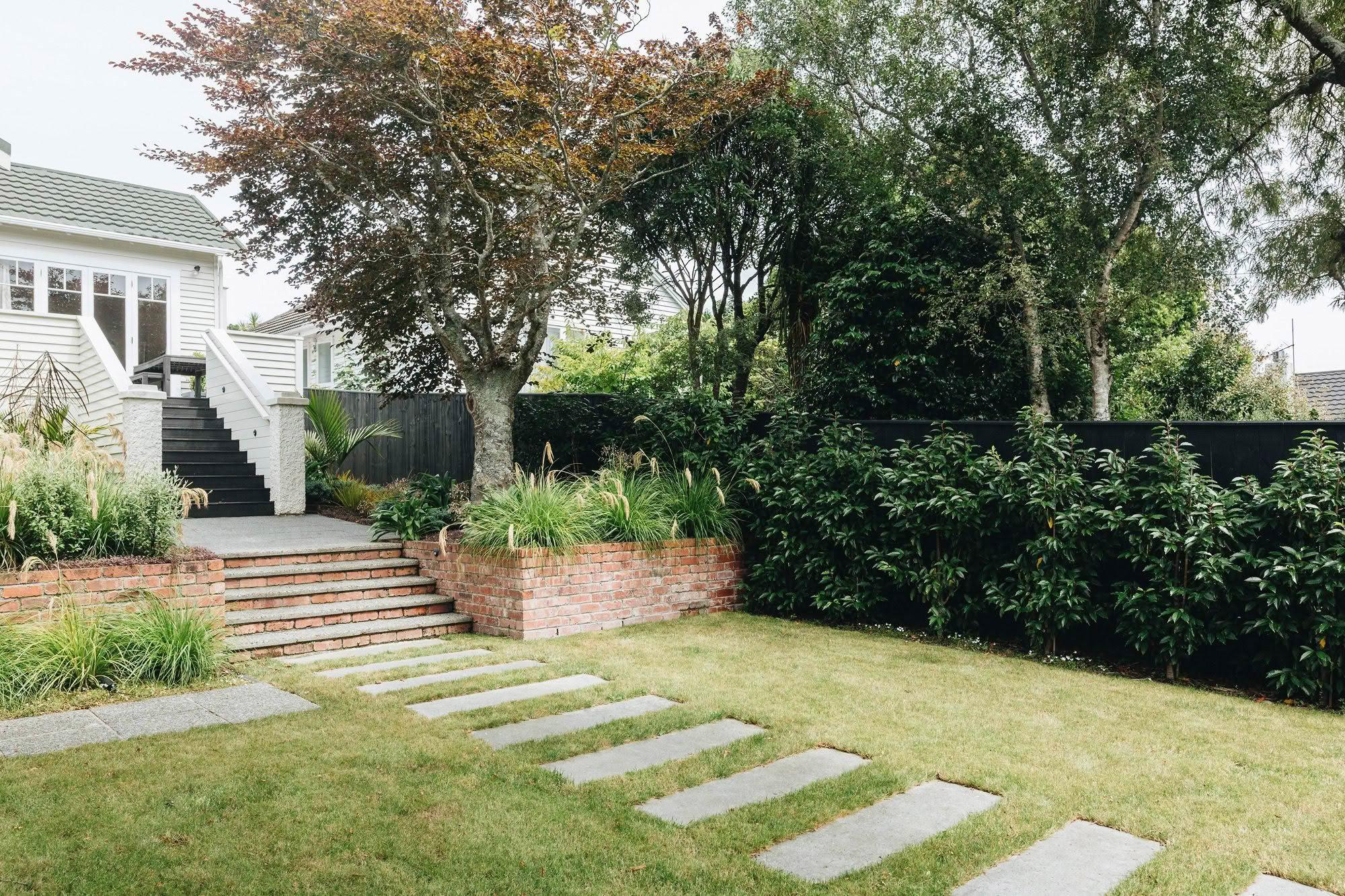
Photo supplied by Louise, Noble Fox
This is where accreditation becomes important. Janet explains that Registered Master Landscapers members go through a rigorous assessment process. They are assessed not only on their technical capability, whether that involves design, construction, planting, maintenance, decks, fences, retaining or foundations, but also on the way they run their businesses. That includes systems, health and safety, liability insurance, communication and professional processes.
For homeowners, this matters because landscaping projects can become complicated quickly. A drawing may look simple, but if drainage, compliance, retaining or structural requirements have not been properly considered, the cost and complexity can change once work begins. Janet notes that an accredited professional is more likely to identify what is missing at the beginning, rather than simply pricing what appears on a plan and later adding costs when problems emerge.
That is one of the reasons the lowest price is not always the safest choice. A lower quote may seem appealing, but if it does not include everything required to complete the work properly, homeowners may not be comparing like with like. A more professional approach should make the true scope clearer from the start.
Landscaping also requires a particular kind of relationship between homeowner and contractor. Unlike some trades that may be in and out of the property quickly, landscapers often work outside a home while the owners are still living there. They may have access to gates, outdoor areas, storage, pets, children’s spaces and private parts of the property. Janet emphasises the importance of communication, trust and having good people on site, especially when working with clients who value their privacy.
That human element can be underestimated. A good landscaping project is not only about the finished garden. It is also about how the process is managed, how changes are communicated, how variations are handled, and whether the client feels informed and respected along the way.
Start with how you want to use your outdoor space#
For homeowners, the starting point should be a clear conversation about what the exterior space needs to do. Is the garden mainly for family life, entertaining, privacy, growing food, street appeal, children, pets, low-maintenance living, or future resale? Does the property need retaining, drainage or better access before planting can even be considered? Should the work happen all at once, or can it be staged over time?
Janet makes the point that a garden does not always need to be built in one go. In fact, a staged approach can make a project more financially accessible, provided there is a clear plan from the beginning. That plan might allow homeowners to complete key structural work first, then add planting, lighting, irrigation, outdoor features or future upgrades in later stages.
Thinking ahead can make a significant difference. If a homeowner may want a pool, outdoor lighting, a spa, irrigation or a future entertaining area, it can be much easier and more cost-effective to plan for those services early rather than digging everything up again later. In a new build, even planting trees early can help create privacy and maturity while the rest of the project is still developing.
This kind of planning shows why landscaping should not be treated as a last-minute layer. It is part of the way the property will function and mature over time.
Design your garden around your lifestyle#
The exterior also has a strong emotional and lifestyle role. Janet describes her own garden as being designed very much for lifestyle, with space for children, entertaining, outdoor cooking, a pool, an outdoor fireplace and greenery that complemented the quality of the home. The garden was not simply about resale value. It was about how the family wanted to live.
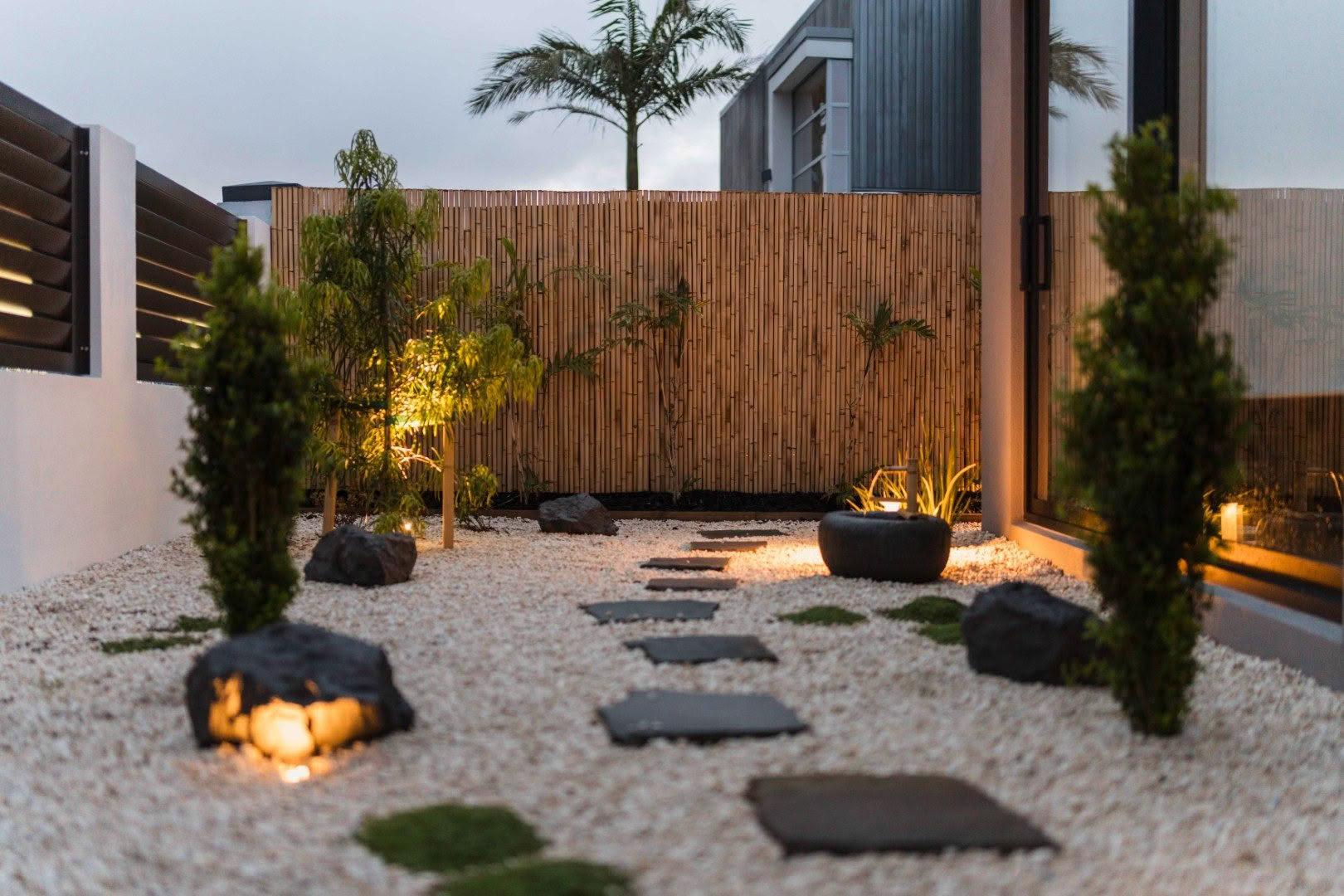
That distinction is important because a well-designed exterior can support daily life in ways that are easy to take for granted. It can create places to gather, spaces to retreat, areas for children to play, views from inside the home, shade, shelter, privacy and connection to nature. Even smaller homes, townhouses and apartments can benefit from thoughtful outdoor planning, whether through pots, vertical gardens, edible planting, courtyards or compact green spaces.
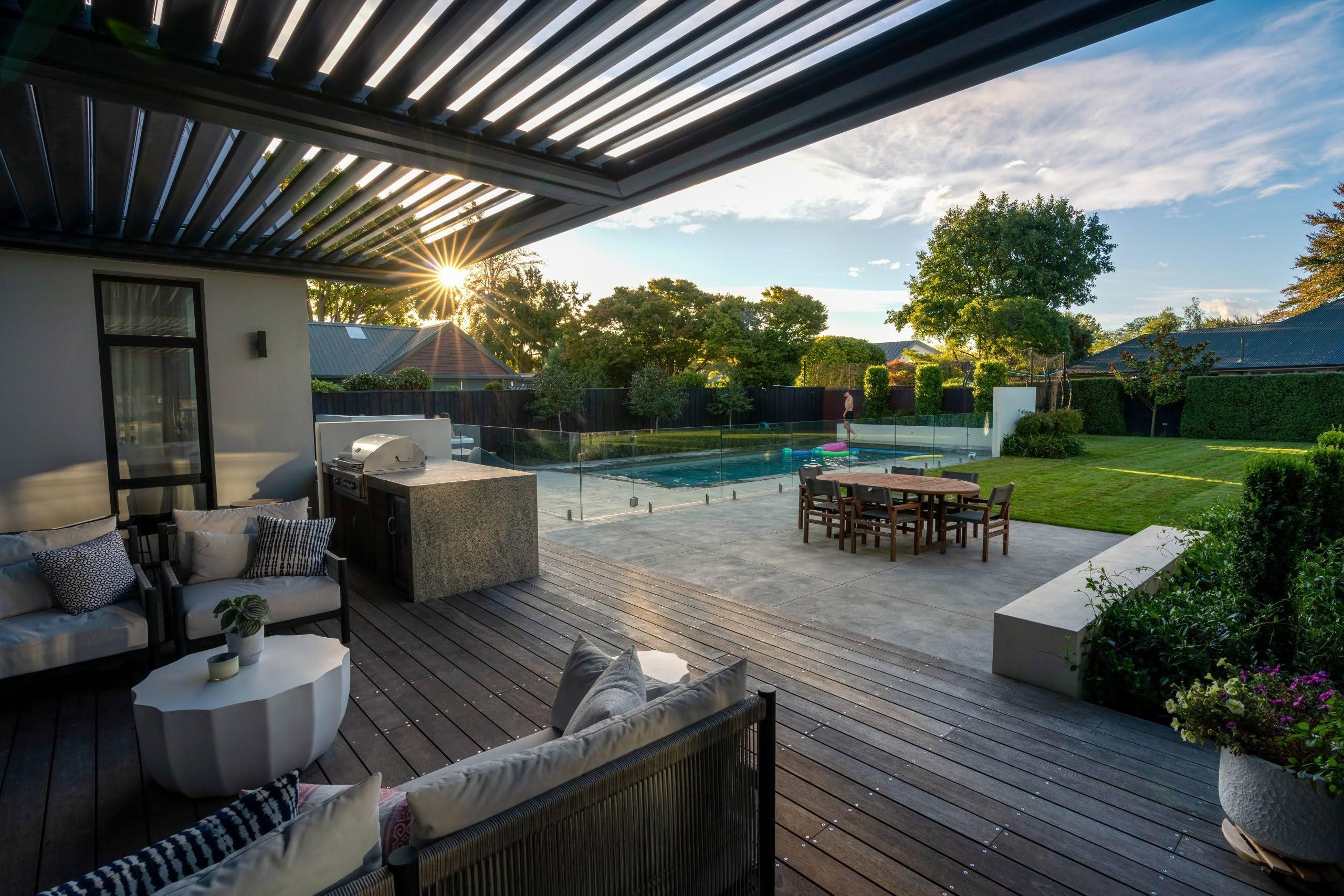
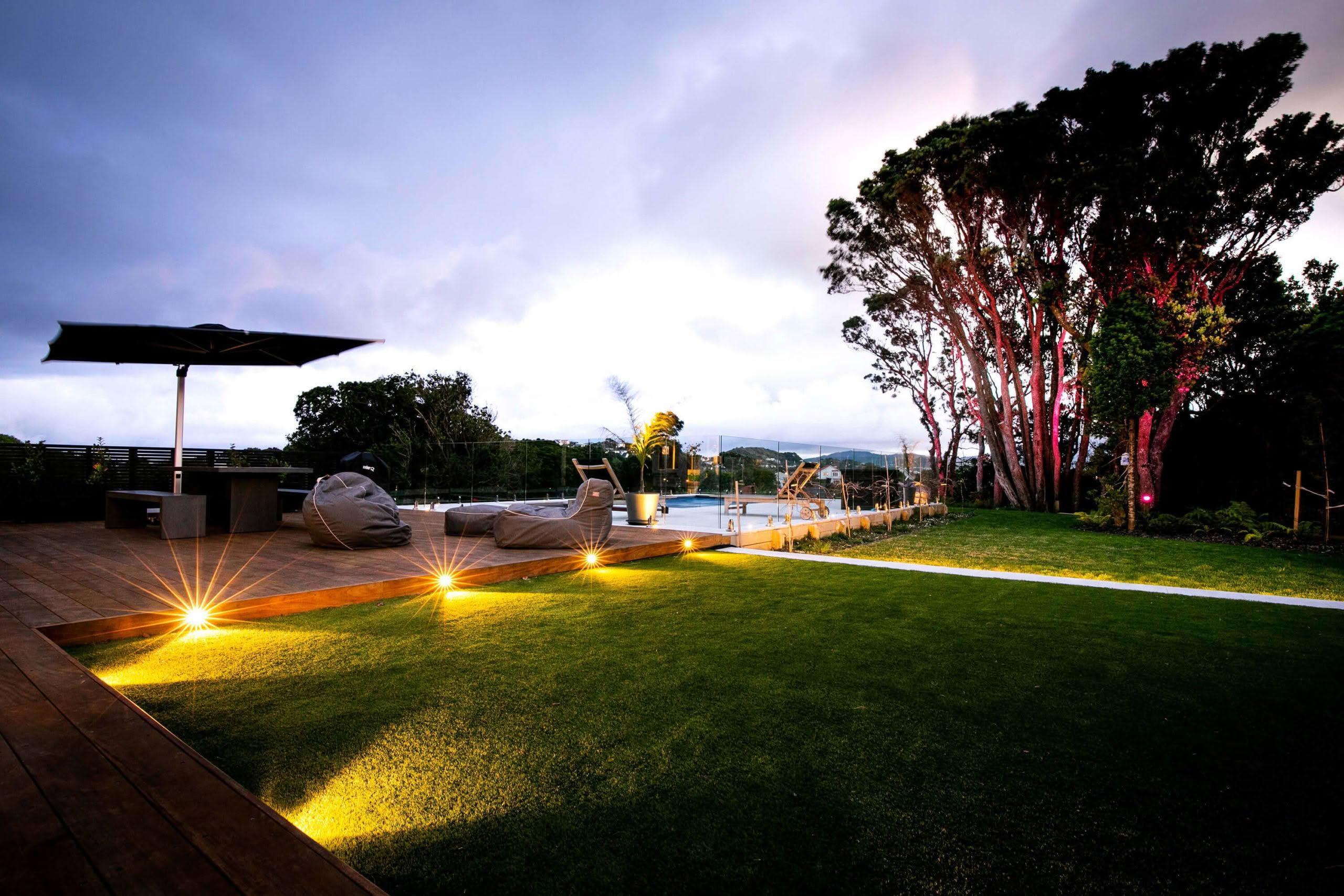
Photo supplied by Chris Owen, Xteriorscapes Ltd.
The wellbeing benefits of green space#
As New Zealand homes change, this becomes even more relevant. The traditional quarter-acre section is no longer the norm for many households, but that does not mean landscaping becomes less important. In smaller spaces, good design may matter even more because every square metre needs to work harder.
A small courtyard can feel generous if it is well planned. A townhouse garden can provide privacy, softness and outdoor living if the planting, surfaces and boundaries are considered properly. An apartment balcony can still offer greenery, herbs or a place to connect with the outdoors. Janet’s point is that everyone can have some access to green, but the solution needs to suit the space.
There is also a wellbeing aspect to this. Janet is careful not to overstate the claim, but she says being able to see green is important for the mind and soul, and that having access to private outdoor space can be healing. For many homeowners, that may be reason enough to think more carefully about the garden, not just as an asset but as part of everyday wellbeing.
Why landscaping matters when selling#
For people preparing to sell, the exterior carries a different kind of importance. The journey from the car door to the front door tells a story. Before a buyer sees the kitchen, bathroom or living room, they have already begun forming an impression from the street, the path, the planting, the lawn, the entrance, the maintenance level and the way the home sits on its site.
A well-maintained garden suggests care. An unkempt exterior can raise questions. Has the home been looked after? Is this just a quick interior touch-up before sale? Are there hidden maintenance issues? Does the property feel inviting, or does it feel like work?
Janet notes that the external appearance of a property is very important and can add value. She references a New Zealand study from 2011 which found that a well-designed and well-maintained garden could increase property value by 16%. While every property will be different, the broader point remains clear: landscaping can influence both lifestyle value and buyer perception.
For sellers, this means the garden should be considered early in the sale preparation process. If major pruning is needed, timing matters. Cut everything back too close to photography and the garden may look bare. Leave it too late and the exterior may not present at its best. Sometimes a professional tidy-up, fresh mulch, strategic planting or potted colour can make a meaningful difference to how the property feels without requiring a full redesign.
That is why landscaping should sit alongside other early sale-preparation conversations. Just as homeowners may speak to an agent, bank, lawyer or interior specialist, it can be valuable to speak with a qualified landscaper or garden professional early enough to make useful decisions.
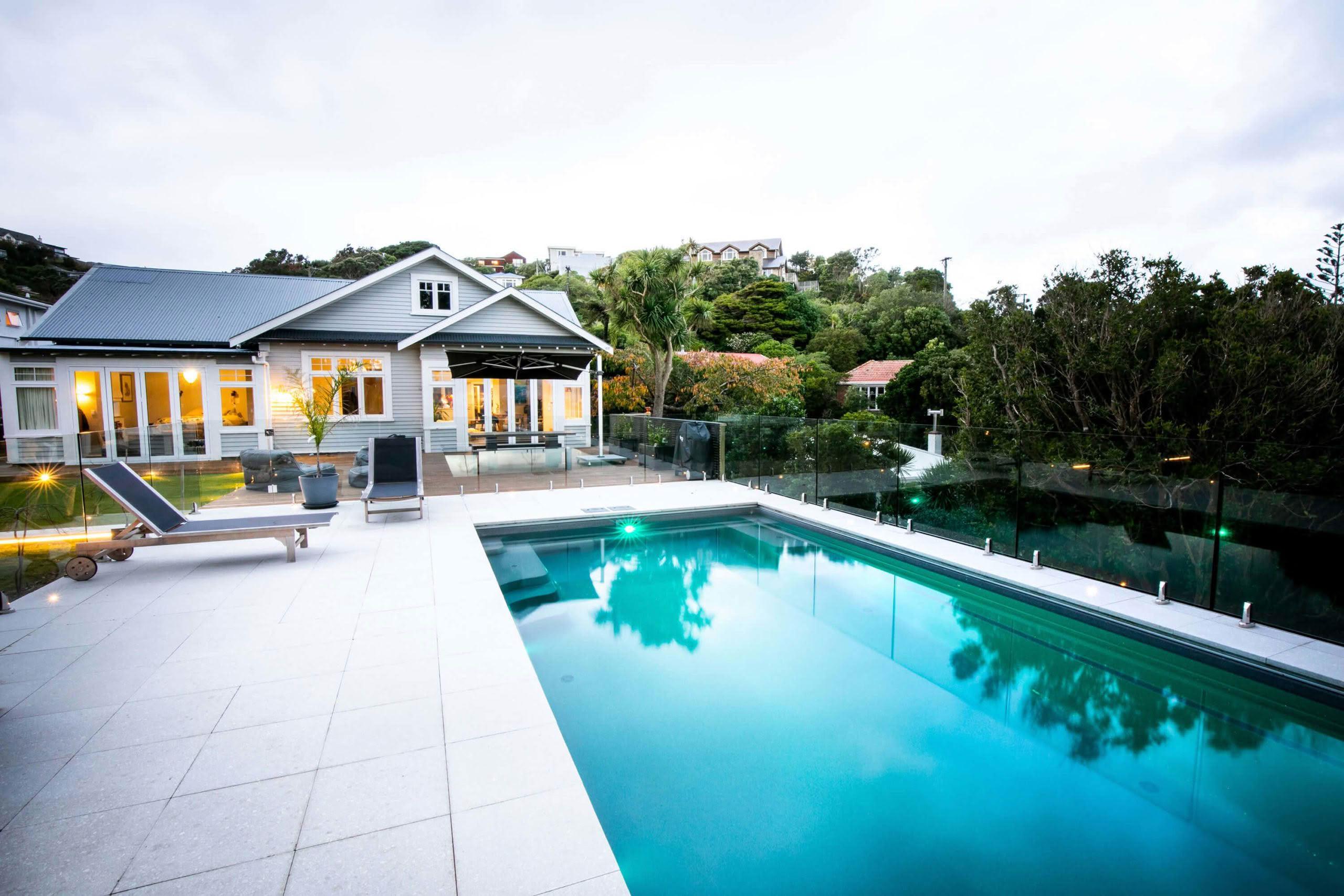
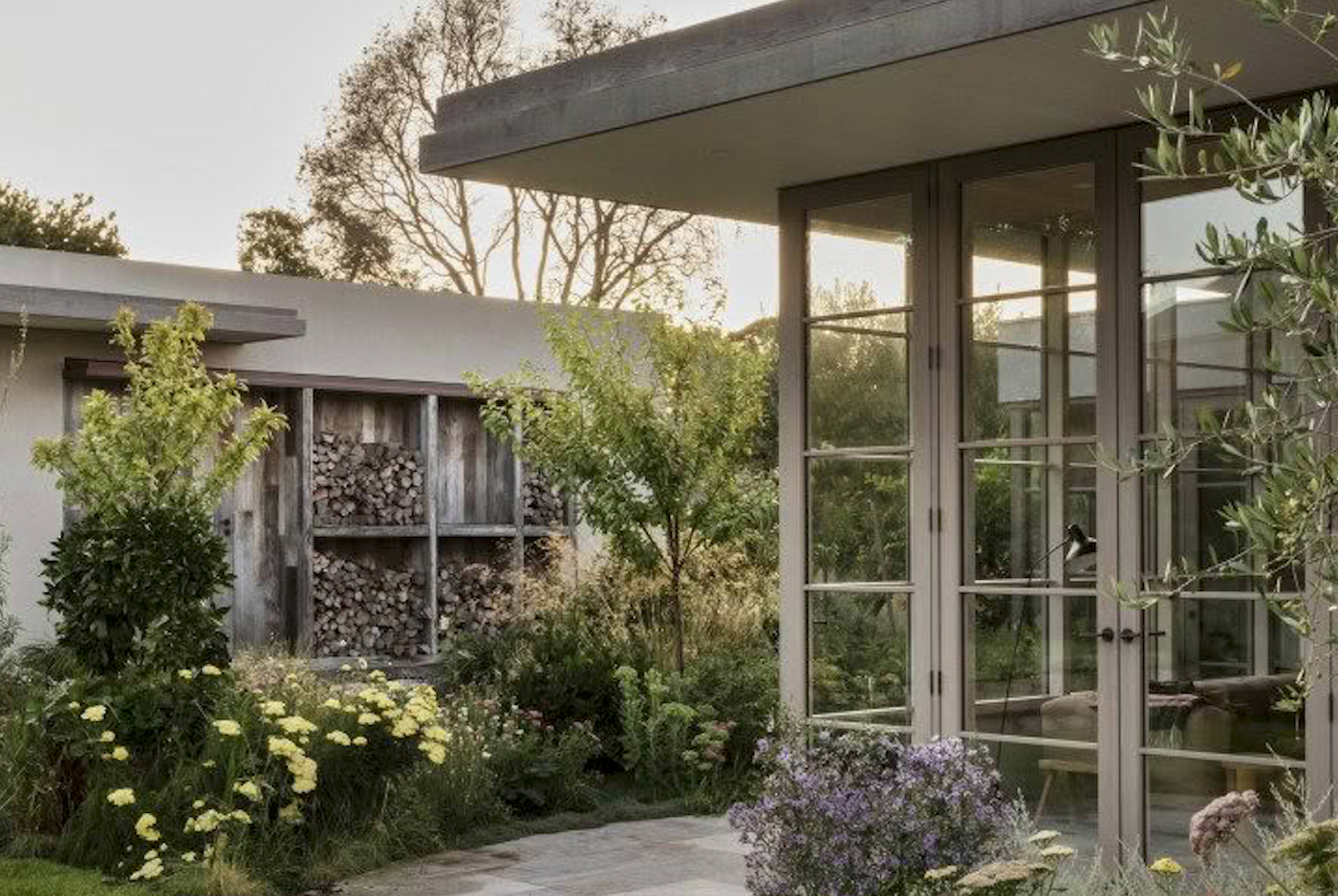
Photo supplied by Sole Landscapes
Think about long-term garden maintenance#
Maintenance is another part of the conversation. Janet is clear that there is no such thing as a no-maintenance garden, although lower-maintenance design is possible. Homeowners need to be honest with designers about how much maintenance they are prepared to do, because the wrong planting or layout can become a burden rather than a benefit.
Professional maintenance can also protect the original investment. A garden is living, changing and maturing, which means it needs care after the build is complete. The best landscaping is not only designed for the first reveal. It is designed to last, settle, grow and continue supporting the home over time.
This long-term thinking is one of the reasons Registered Master Landscapers also focuses on supporting the industry itself. The organisation provides accreditation, standards, contracts, education and business support for members, helping landscaping businesses develop more professional systems. Janet talks about supporting smaller or younger companies as they grow, helping them understand issues such as employment, insurance, health and safety, intellectual property, communication and profitability.
That matters to consumers because stronger businesses are better placed to deliver reliable work. A landscaper who understands both the craft and the business side is more likely to manage projects professionally, communicate well, honour design intent and stand behind the work.
Supporting the next generation of landscapers#
Industry recognition also plays a role. Registered Master Landscapers celebrates excellence through the Landscapes of Distinction Awards, which recognise outstanding gardens and landscape projects, and the Young Landscaper of the Year competition, which supports emerging talent. Janet explains that the Young Landscaper competition assesses practical skills, communication, interview ability, broad knowledge and leadership potential. It is not just about whether someone can build or plant well. It is about whether they can grow into the kind of professional the industry needs.
That focus on the next generation is important. Landscaping is physical work, and Janet notes that people may eventually need to move from hands-on labour into leadership, management or business ownership. Creating pathways for young landscapers helps the industry remain skilled, sustainable and professional.
For homeowners, these industry structures may feel distant from their own backyard project, but they are connected. Accreditation, awards, training and professional development all help raise standards. They give consumers more confidence that the people they are working with have been assessed, supported and recognised within their field.
Make your exterior part of the overall home#
Ultimately, the exterior of a home deserves the same level of thought as the interior. A kitchen may become the heart of the home, but the landscape shapes the setting around it. A bathroom may improve comfort, but a well-designed garden can improve daily life. New furniture can refresh a room, but outdoor spaces can change how a property is used, seen and valued.
The most successful homes usually feel considered from the street to the back fence. The interior and exterior speak to each other. The garden reflects the home’s architecture, lifestyle and environment. The outdoor areas are not an afterthought, but part of the way the property works.
For anyone renovating, building, buying or preparing to sell, that is the key lesson. The exterior is not the forgotten part of the property. It is one of the first things people experience, one of the spaces families live in, and one of the most powerful ways a home can connect with its environment.
When landscaping is planned well and delivered by the right professionals, it can do far more than make a property look good. It can make the home feel complete.
To learn more about landscape design and get exterior spaces planning, top tips and more, visit the Trends Property Exterior section, where you can read, look, watch and listen, including the Trends Property Insight Series podcast episode with Janet Clarke.